







Search Results for: Bourbon Coffee Trees
Brazilian Yellow Bourbon Coffee Beans: A Comprehensive Analysis of Flavor Characteristics, Mouthfeel, and Aroma
The Bourbon family occupies an important position in the genealogy of coffee varieties. From Kenya's SL series to Brazil's Yellow Bourbon, Caturra, and Pacas, each variant has its own unique origins and flavor expression. Among them, Yellow Bourbon, which is unique to the state of São Paulo, Brazil, has become a highly watched variety in the specialty coffee world thanks to its standout results in the Cup of Excellence (CoE) competitions. This article will systematically sort out the origins and evolution of the Bourbon family, focusing on the variety characteristics and growing-region profile of Brazilian Yellow Bourbon, and present Front Street Coffee's recommended Queen Estate Yellow Bourbon natural batch, analyzing its balanced sweetness, creamy smoothness, and flavor profile woven together with orange, apricot, and chocolate caramel. [more…]
A Complete Guide to Coffee Variety Classification and Flavor Profiles: From Arabica and Robusta to the Typica and Bourbon Families
Coffee is no longer just a pick-me-up; it is a lifestyle. Yet, faced with shelves overflowing with coffee beans, do you truly understand the differences between the varieties behind them? There are over 500 species of coffee trees worldwide, with Arabica and Robusta dominating commercial cultivation. From the native Typica of Ethiopia, to the Bourbon that mutated after being transplanted to Yemen, and to the Geisha that has taken the specialty coffee scene by storm in recent years, each variety displays distinctly different aromas and flavors due to differences in genetics and terroir. This article systematically sorts out the genealogical threads of coffee varieties, explains in detail the flavor divide between Arabica and Robusta, and introduces one by one the characteristics of Typica, Bourbon, and their many mutations and hybrid varieties. At the same time, by combining the flavor expressions of representative products under the Front Street Coffee brand such as Blue Mountain, Mandheling, Kona, and Pink Bourbon, it will guide you in building a complete cognitive map of coffee varieties. [more…]
Naturally Low-Caffeine Rare Variety Laurina: The Legendary Coffee from Extinction on Bourbon Island to Revival and Rebirth
Bourbon Pointu is a rare coffee variety with elongated beans and pointed ends, discovered on Bourbon Island in 1810. Its caffeine content is only half that of ordinary Bourbon, making it a naturally low-caffeine coffee. During the 18th and 19th centuries, it was widely cultivated, with annual production once reaching 4,000 metric tons. However, disasters such as hurricanes, fire ants, and leaf rust followed one after another. After 1942, it completely disappeared from Réunion Island and was considered extinct by the coffee world. It was not until Japanese Ueshima Coffee expert Yoshiaki Kawashima spent years searching that in 2001, more than thirty surviving plants were discovered in the wild on Bourbon Island. Subsequently, French scientists collaborated with Ueshima Coffee to carry out revival efforts, and only in 2006 was the first small batch of beans harvested. This article introduces the origin of the name Bourbon Pointu, its historical rise and fall, flavor characteristics, and expensive price, as well as Front Street Coffee's recommendation and interpretation of this legendary variety. [more…]
Pointed Bourbon: A Rare Naturally Low-Caffeine Coffee Variety, Full Analysis of Flavor and History
Bourbon Pointu is a rare coffee variety with a natural caffeine content of only 0.5%, named for its narrow, elongated beans with pointed ends. It is naturally low in caffeine due to genetic degradation and has outstanding flavor, but its yield is extremely low and it is susceptible to leaf rust and black spot disease, having once become extinct. In the 18th century, it was highly praised by Louis XV and Balzac, but later disappeared due to disasters, and was only rediscovered and revived in 2001. At the 2018 World Coffee Brewing Championship, Swiss competitor Emi Fukahori won the championship using it, proving its exceptional quality. This article will introduce in detail the characteristics, history, flavor of Bourbon Pointu, and Front Street Coffee's brewing parameters. [more…]
Missionary Bourbon Coffee Beans: Origin Story, Flavor Profile, and Washed Brewing Parameters Guide
The coffee world boasts a vast array of varieties, yet the tree species that truly achieve commercial scale and outstanding quality are actually few. Within the extensive pedigree of Arabica varieties, Bourbon is the oldest surviving member, and "French Mission Bourbon" is a living witness to the history of coffee dissemination—it was introduced by French missionaries from the Gulf of Aden in Yemen to East Africa, taking root in Kenya ever since. This article begins with the classification of coffee trees, outlining the botanical characteristics of the Bourbon species and Kenya's coffee grading system, then focuses on Front Street's Kenya Haniya natural beans, analyzing the terroir background of the West Hanna Estate and the Harris family's nearly a century of cultivation heritage. The article also provides Front Street's recommended V60 brewing parameters and describes the layers of yellow plum, lemon, brown sugar, and chocolate flavors presented by this bean under natural processing, offering a complete reference for coffee enthusiasts who appreciate fruity acidity and fermented wine-like aromas. [more…]
Analyzing the Relationship Between Arabica and Specialty Coffee: An Overview from the Three Primary Species to Major Varieties Such as Bourbon, Typica, and Geisha
Many people habitually equate Arabica coffee beans with specialty coffee beans, but from a definitional standpoint, specialty coffee is necessarily Arabica, while Arabica does not necessarily reach specialty grade. This article begins with the global spread of coffee varieties throughout history, sorting through the varietal distribution of major producing regions such as Africa, Latin America, Asia and the Pacific, and Australia, then moves into a botanical taxonomy perspective, introducing the three primary species—Arabica, Robusta, and Liberica—and expanding one by one on the origins, characteristics, and flavor profiles of common varieties such as Typica, the Bourbon family, Caturra, Catuai, Pacas, Mundo Novo, Tim Tim, Catimor, and Geisha, while interspersing information on representative products from the Front Street Coffee brand, helping coffee enthusiasts build a clear framework for understanding varieties. [more…]
A Complete Analysis of Arabica Coffee Varieties: Typica, Bourbon, and Geisha—Three Classic Lineages and Flavor Comparison
The flavor and quality of coffee are largely determined by variety. From Ethiopian heirloom varieties to Geisha, which has swept the specialty coffee world, the Arabica species has given rise to numerous varieties such as Typica, Bourbon, Caturra, Catuai, and Pacas, each with its own unique cupping performance and cultivation characteristics. This article systematically sorts out the classification framework of coffee's three main native species, traces the spread history of Typica and Bourbon, explains in detail the flavor differences of the Bourbon family and its derived varieties, and introduces one by one the rise of Geisha. The article also compiles information on a number of representative products from Front Street Coffee corresponding to these varieties, helping coffee enthusiasts build a clear framework for understanding coffee varieties. [more…]
Pointed Bourbon: The Natural Low-Caffeine Coffee Legend of Réunion Island, the Origin of the Mocha Variety and Darling of Royalty
Laurina, also known as Pointed Bourbon, is a rare coffee variety originating from Réunion Island. It is not only one of the most primitive subspecies of the Bourbon family but is also considered a parent of the Mocha variety, making it the source of coffee trees in Latin America. This coffee tree has smaller leaves and fruits than regular Bourbon, with slender pointed fruits and a low, Christmas-tree-like shape. Its caffeine content is only half that of regular Arabica, making it a natural low-caffeine coffee. In the 18th century, Pointed Bourbon was highly sought after by European royalty for its excellent flavor, and Louis XV once praised it as the best coffee in the world; however, a series of hurricanes and diseases in the 19th century nearly caused it to disappear from history. It was not until 1999, after Japanese experts searched unsuccessfully, that local botanists, through years of effort, finally found wild mother trees and gradually cultivated them, allowing this legendary variety to be reborn. Today, the Pointed Bourbon offered by Front Street Coffee features flavors of peach, honey pomelo, wild apple, and orchid, with a mouthfeel as rich as hundred-flower honey. [more…]
What is Laurina Pointed Bourbon Coffee? The Near-Extinction and Revival of a Naturally Low-Caffeine Variety, and a Flavor Analysis
In the coffee world, low caffeine often means artificial processing, but nature has given us an exception—Laurina, academically known as Coffea Laurina. Due to genetic degeneration, this variety naturally contains only 0.5% caffeine content and has outstanding flavor, yet it is rare and expensive because of its extremely low yield. It once swept across Europe in the 18th century, with even King Louis XV of France and the literary giant Balzac among its devotees, but it nearly became extinct due to disasters such as hurricanes and pests and diseases. It was not until Yoshiteru Kawashima of Ueshima Coffee in Japan spent years searching that this legendary variety was revived. This article will introduce the origin, extinction, and revival story of Laurina, as well as the brewing parameters and flavor performance tested by Front Street Coffee. [more…]

Complete Guide to Coffee Varieties and Flavor Comparison: From Typica and Bourbon to Geisha
The world of coffee varieties is intricate and diverse, with over 500 species of coffee trees globally and as many as 6,000 varieties. However, those with real commercial value and widespread cultivation are mainly concentrated in the two major systems: Arabica and Robusta. Front Street Coffee has systematically sorted out the origins, characteristics, and flavor profiles of major varieties and their mutations, from Typica and Bourbon to Geisha, while also introducing the cupping characteristics and brewing parameters of classic regional coffees such as Mandheling, Blue Mountain, and Kona. Through a combination of text and images, this article helps coffee enthusiasts build a clear understanding of the relationship between coffee varieties and taste. Whether you are a novice just starting out or a seasoned enthusiast, you will find practical reference information here. [more…]
An Analysis of the Pointed Bourbon Coffee Variety: A Complete Guide to Its Naturally Low-Caffeine Traits, Historical Rise and Fall, and Flavor and Brewing
Bourbon Pointu is a natural coffee variety with extremely low caffeine content, academically known as Coffea Laurina. Its beans are slender and pointed at both ends, and due to genetic degeneration, its caffeine content is only about 0.5%, requiring no artificial decaffeination, yet it has low yields and outstanding flavor, earning it a reputation as a rare variety in the coffee world. It was once popular on Bourbon Island in the 18th and 19th centuries, then nearly went extinct due to disasters, and was later rediscovered and revived by Japanese Ueshima Coffee expert Yoshiaki Kawashima. At the 2018 World Brewers Cup, Swiss competitor Emi Fukahori won the championship using Bourbon Pointu from Brazil's Daterra estate, defeating Geisha and drawing attention once again. In this article, Front Street Coffee will provide a comprehensive interpretation of this legendary coffee, from its history and variety characteristics to brewing parameters and flavor. [more…]
Colombia Huila San Agustin El Mirador Estate Pink Bourbon Micro-Lot Specialty Coffee Bean Story
In the small town of San Agustín in Colombia's Huila region, there is a national archaeological park designated as a UNESCO World Heritage Site. This place is not only home to Colombia's earliest human settlement, but also produces one of the world's rarest coffees: Pink Bourbon. Pink Bourbon is a natural hybrid of Yellow Bourbon and Red Bourbon, a rare variety resulting from recessive gene expression, difficult to cultivate with extremely low yields. The green bean buying team at Front Street Coffee traveled personally to Finca El Diviso to select this micro-lot washed Pink Bourbon, which presents sweet orange, sugarcane sweetness, and a pleasant juicy mouthfeel. This article will guide you through the genetic secrets of Pink Bourbon, its cultivation challenges, and the story and flavor profile behind this coffee. [more…]
Arabica Coffee Region Flavor Analysis: A Detailed Guide to Bourbon and Typica Variety Characteristics and Cultivation Differences
The global spread and evolution of Arabica coffee have always revolved around two ancient varieties: Typica and Bourbon. Having left Ethiopia's genetic treasure trove, these varieties, though widely planted in Central and South America, India, and East Africa, remain frail and lacking in disease resistance due to their narrow genetic base. Bourbon and Typica share one critical need—shade trees—without which they struggle to express ideal flavors. This article will take an in-depth look at the origins, dissemination paths, bean shapes, and cultivation performance of Bourbon and Typica, and reveal the common industry misconception that "round-bodied Bourbon does not all come from Bourbon Island," while also clarifying Typica's true standing in today's specialty coffee and its derived varieties. [more…]
Does Specialty Coffee Only Mean Arabica? A Full Analysis of the Three Native Species and Common Arabica Varieties
The variety of coffee beans directly influences the flavor profile in the cup and also determines the growing conditions and disease resistance of the coffee tree. In the specialty coffee world, Arabica is the absolute dominant species, but Arabica is not the only answer for specialty coffee. This article starts with the three major native coffee species, sorting out the differences among Arabica, Robusta, and Liberica in flavor, yield, and uses, then delves into common Arabica sub-varieties such as Typica, Bourbon, Caturra, and Geisha, explaining their origins, plant characteristics, cultivation performance, and cupping styles one by one, and includes production region and processing information for several corresponding Front Street Coffee products, for coffee lovers to follow the guide. [more…]
There are over five hundred species of coffee trees worldwide, with subdivided varieties numbering as many as six thousand. Faced with such a dazzling array of coffee beans, many enthusiasts often recognize only the two major names, Arabica and Robusta, while having only a vague understanding of the family lineage behind them. This article systematically sorts out the complete脉络 of coffee varieties: first introducing the four major coffee tree species and their commercial value, then explaining in detail the two main lines under Arabica—Typica and Bourbon—as well as the common variants derived from them such as Mandheling, Blue Mountain, Kona, Maragogype, Pacamara, Caturra, Catuai, and Geisha, and finally supplementing with interspecific hybrid varieties of Arabica and Robusta. Whether you are a beginner just starting out or a seasoned player looking to refine your cupping knowledge, this lineage chart can help you build a clear framework for understanding coffee varieties. [more…]
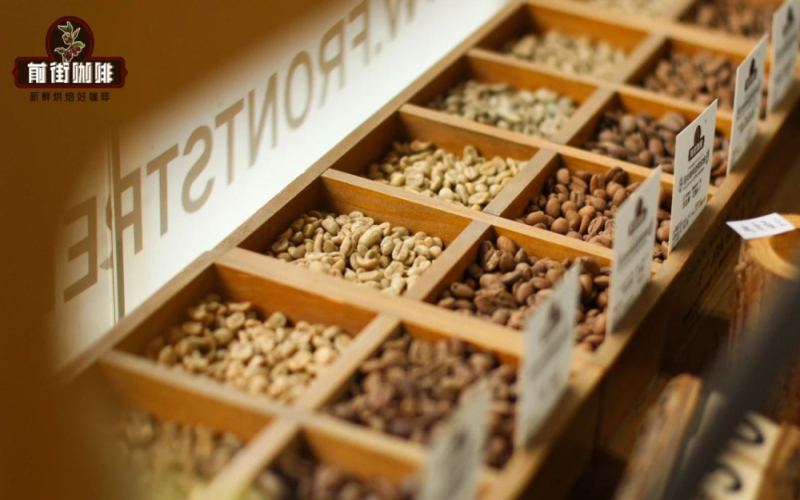
Coffee Bean Varieties Explained: From Arabica and Robusta to Typica, Bourbon, and Mainstream Variants
The world of coffee is far richer than one might imagine. From the two main species, Arabica and Robusta, to Typica, Bourbon, and their many genetic mutations and hybrid varieties, every type of coffee bean has its own unique origin story, flavor profile, and suitable growing environment. This article systematically sorts out the origins and characteristics of common coffee varieties, including well-known coffees such as Blue Mountain, Mandheling, Kona, and Geisha, as well as improved varieties like Caturra, Catuai, Pacas, and SL28, helping coffee enthusiasts build a complete framework of variety knowledge and have clearer direction when purchasing and tasting. [more…]
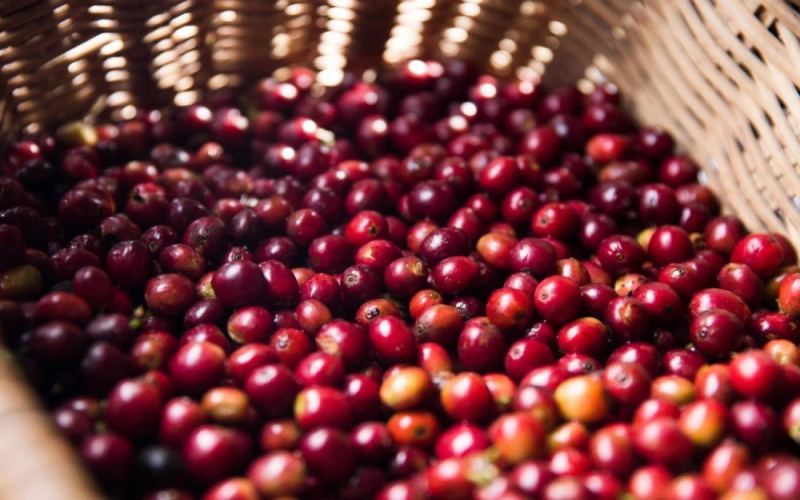
A Complete Guide to Coffee Bean Varieties: A Flavor Map from Typica and Bourbon to Caturra, Maragogype, and Geisha
The world of coffee is far richer than we imagine. From the two main commercial species, Arabica and Robusta, to classic derivative varieties such as Typica, Bourbon, Caturra, and Maragogype, and on to the Geisha that has been so highly sought after in recent years, every variety carries a unique story of terroir and genetics. This article systematically sorts out the classification system of coffee varieties, explains in detail the origin, characteristics, and flavor performance of each variety, and includes Front Street Coffee's recommended tasting guide to help coffee lovers find their own cup among the dazzling array of beans on the menu. [more…]
A Complete Analysis of Coffee Variety Classification Names | What Are the Ancient Arabica Varieties Like Typica and Bourbon?
The flavor, quality, and even the difficulty of cultivation of coffee are all closely tied to the variety of the coffee bean. This article systematically sorts out the three major native species of coffee—Arabica, Robusta, and Liberica—and focuses on introducing Typica, Bourbon, and their many derived varieties, including their origins, characteristics, and representative producing regions. From their origins in Africa to their global spread, from the ancient Typica to the Geisha that has swept the specialty coffee world, you will see how varieties shape the personality of a cup of coffee. The article also intersperses information on the producing regions, estates, altitudes, and processing methods of several corresponding Front Street Coffee products, making it easy for enthusiasts to trace them one by one and understand the connection between varieties and flavors in the cup. [more…]
Naturally Low-Caffeine Pointed Bourbon: The Legendary Coffee from Near Extinction to World Champion
Decaf coffee usually relies on artificial processing to reduce caffeine, but in nature there actually exists a variety with naturally very low caffeine content—Laurina. Its caffeine content is only about 0.5%, its flavor is outstanding yet its yield is scarce. It was once all the rage in Europe in the 18th century, and was also once thought to be extinct. Later, through the search by Japanese UCC expert Yoshinori Kawashima, Laurina was rediscovered on Bourbon Island (Réunion) and revival cultivation began. At the 2018 World Brewers Cup, Swiss competitor Emi Fukahori even used Laurina from Brazil's Daterra estate to defeat many Geisha entries and win the championship. This article will take you through the history of Laurina, its varietal characteristics, as well as Front Street Coffee's brewing parameters and flavor performance. [more…]
Coffee Bean Variety Guide: Origins and Flavor Profiles of 11 Common Beans Including Typica, Bourbon, and Maragogipe
In the world of coffee, the two great camps of Arabica and Robusta support the daily cup for the vast majority of people, but what truly makes flavors endlessly varied are those ancient names hidden within the variety pedigree: Typica, Bourbon, Maragogype, Caturra, Mundo Novo... They either originate from the primitive forests of Ethiopia or were born from laboratory hybrid breeding, and each one carries a unique origin story and flavor imprint. This article systematically sorts out 11 of the most common coffee bean varieties, from botanical classification to cupping performance, from the elegance of Typica to the sweetness of Bourbon, from the huge size of Maragogype to the floral and fruity aromas of Geisha, breaking down their characteristics, producing regions, and representative beans one by one. Whether you are a pour-over enthusiast or an espresso player, this is a variety guide worth keeping. [more…]